
Lo-Fi Tape Drums: building warmth and texture in your beats
Tape saturation, vinyl crackle, and pitch instability are what make lo-fi drums feel alive. Learn how to use 420 dusty one-shots and loops to build an authentic lo-fi sound.
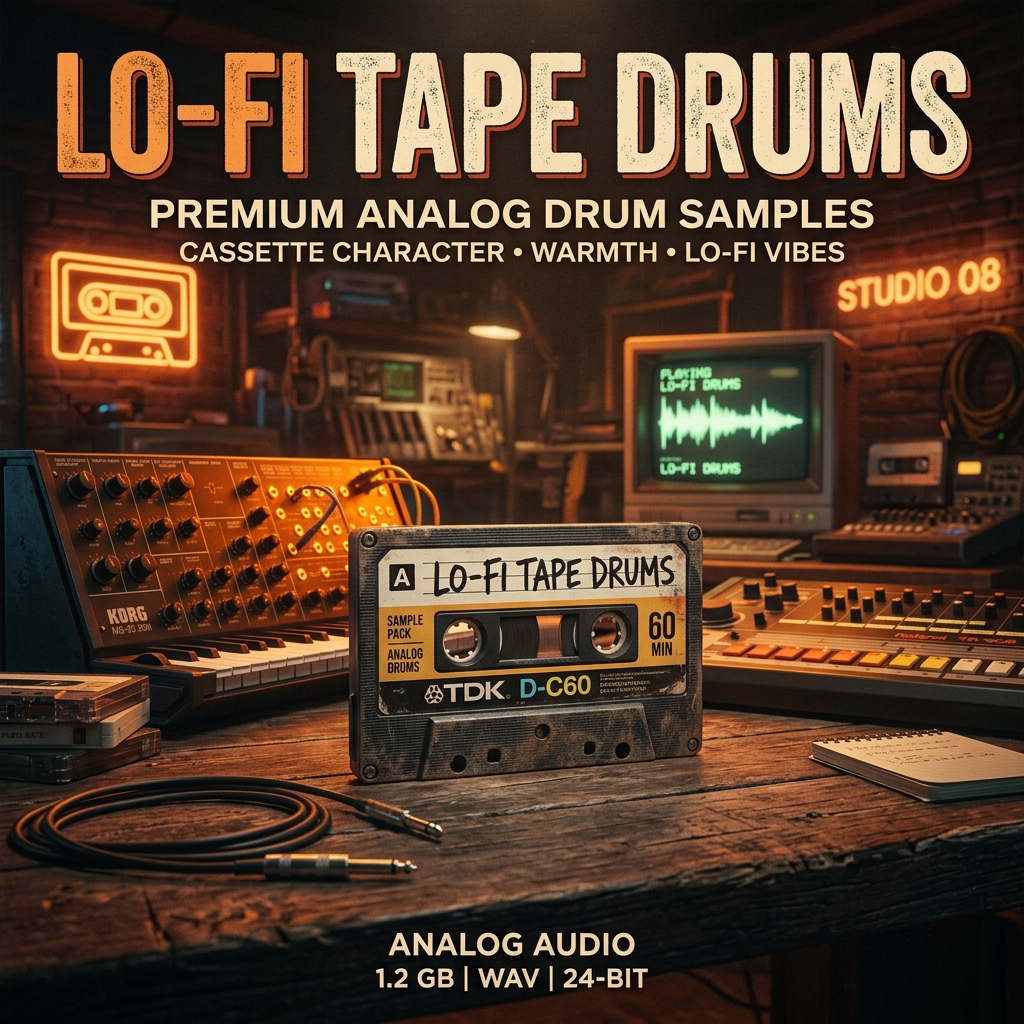
Lo-fi production is built on deliberate imperfection. Where other genres pursue the cleanest, tightest sound possible, lo-fi hip-hop and chill beats lean into the artifacts of analog playback: the warmth of tape saturation, the snap of worn drum heads, and the subtle pitch wobble of a cassette running slightly slow. These textures signal familiarity and comfort to the listener, which is why lo-fi consistently dominates study and focus playlists worldwide.
Drum texture is the foundation of this sound. A clean, over-compressed kick sits wrong in a lo-fi track even when the chords and melody are perfect. The drums need to breathe, creak, and feel like they were recorded in an imperfect room onto tape that has been played one too many times. Getting this right comes down to sound selection first and processing second, and Lo-Fi Tape Drums gives you 420 one-shots and loops built from exactly that character.
Working with Lo-Fi Tape Drums
The pack is organized into kicks, snares, hi-hats, percussion, and full drum loops. Start with the loops to establish a reference groove, then replace individual hits with one-shots to customize the pattern.
- Layer a kick: pull two or three kick one-shots at slightly different volumes and pitches, detuning one by 8 to 15 cents, and blend them. The pitch offset creates a subtle sense of tape warping that sits naturally in the mix.
- Layer snare crackle: place the built-in crackle samples one or two dB below the main snare hit to add surface noise without overwhelming the transient.
- Apply wow and flutter: pitch-shift loops down by a semitone or two, then add a small amount of wow and flutter using RC-20, iZotope Vinyl, or Chow Tape Model. Even 5 to 10%
wow depthtransforms a solid groove into something that sounds genuinely recorded to tape.
Processing lo-fi drums
- Set up parallel compression on the drum bus: send it to a second channel, compress aggressively with fast attack, medium release, and 8 to 10 dB of gain reduction, then blend the two signals at 30 to 50% wet. This adds density and glue without squashing the organic dynamics.
- Apply a light vinyl simulation plugin to the full drum bus — keep surface noise low and wow minimal — then add a low-pass filter cutting above 10 to 12 kHz. The soft rolloff removes the digital high-end sheen and replaces it with the muffled, telephone-speaker quality that defines the genre.
- Add a short reverb with 20 to 30 ms of pre-delay using a small room or plate setting. Keep the wet signal low: lo-fi drums should feel close and intimate, not cavernous.
Who makes lo-fi music and the typical DAW setup
Lo-fi producers range from bedroom beatmakers to film and game composers to professional producers building ambient catalog music for streaming platforms. A laptop, headphones, and a mid-range audio interface are enough to produce at a competitive level — expensive hardware and treated rooms are not required.
- Ableton Live: session view and audio warp make it ideal for loop-based lo-fi work.
- FL Studio: popular among hip-hop producers; its step sequencer suits lo-fi drum patterns.
- Logic Pro X: preferred by Mac users who want integrated vintage emulation via Vintage Tape Delay and Vintage Console.
All three handle this pack equally well. The built-in character of the samples means you can start making lo-fi beats within minutes of loading them.
Frequently asked questions
What BPM should I use for lo-fi beats?
Most lo-fi hip-hop sits between 70 and 90 BPM, with 75 to 85 being the sweet spot for study and focus playlists. Below 70 starts to feel ambient rather than rhythmic. A swing setting of 10 to 20% on your DAW grid loosens the groove and adds the organic, human feel the genre depends on.
Do the loops in Lo-Fi Tape Drums have a fixed key?
The loops are rooted in A minor and C major by default, covering the most common lo-fi chord roots. You can pitch-shift them freely: lo-fi tolerates pitch shifting well because the artifacts introduced by resampling fit the aesthetic. Shifting by more than 3 to 4 semitones can add useful tape-warping character rather than degrading the quality.
Should I apply more tape saturation on top of the pack's built-in processing?
Yes, in moderation. The one-shots already carry baked-in character, so adding a second stage of tape saturation to the drum bus at a low drive setting blends the hits into a cohesive unit rather than making each hit sound individually processed. Keep the saturation subtle — around 2 to 4 dB of harmonic addition at most — to preserve the punch of the individual transients.
Recommended Related Products
Lo-Fi Tape Drums
420 dusty, tape-saturated one-shots and loops for lo-fi and hip-hop.